
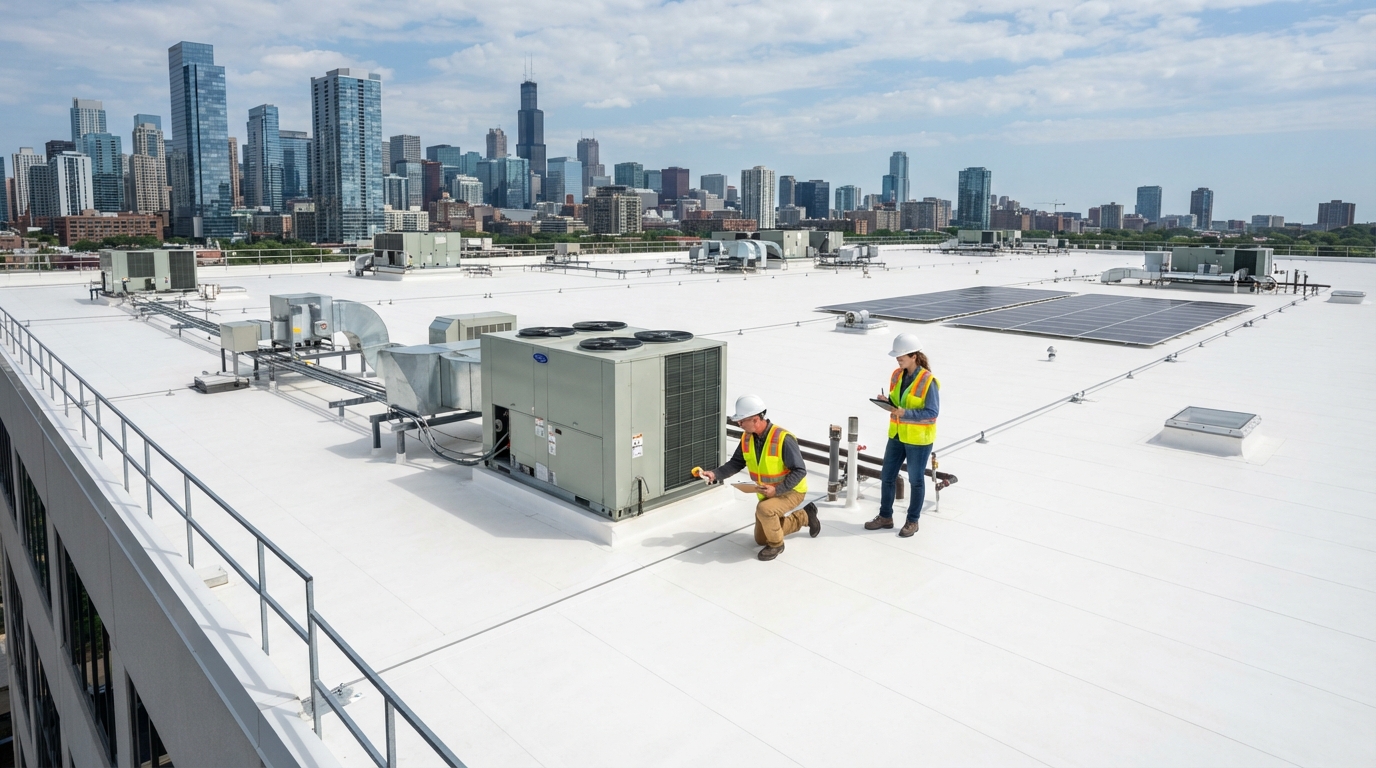
Commercial Roof Maintenance: A Preventive Guide for Oklahoma Businesses
A commercial roof is one of the largest, least-visible assets a business owns — and it's usually only top of mind when it's actively leaking onto inventory or into a ceiling tile above a customer's head. In Oklahoma, where commercial roofs deal with the same hail and wind load as residential ones but at a much larger, flatter, more failure-prone scale, a preventive maintenance plan is genuinely cheaper than reactive repair over the life of the roof.
Here's what an actual maintenance plan should cover, and why waiting for a visible leak is the most expensive way to manage a commercial roof.
Why Commercial Roofs Fail Differently Than Residential Ones
Most commercial buildings in Oklahoma have low-slope or flat roofing systems — built-up roofing (BUR), modified bitumen, single-ply membranes like TPO or EPDM — rather than pitched asphalt shingles. These systems fail differently: pooling water, membrane seam separation, and flashing failure around rooftop HVAC units, drains, and penetrations are far more common than the granule loss and shingle cracking you'd look for on a house. A flat roof also hides problems longer — water can travel laterally under a membrane and show up as an interior leak yards away from where the actual failure point is.
What a Preventive Maintenance Plan Should Actually Include
- Biannual inspections, minimum — spring and fall. Spring inspections catch winter freeze-thaw and ice damage before summer heat makes membranes more vulnerable to further stress. Fall inspections catch summer UV degradation and any storm damage before winter moisture gets into anything compromised.
- Post-storm inspections after any significant hail or wind event, separate from your scheduled biannual visits. Flat commercial membranes can take hail impact damage that isn't visible from ground level or even from a casual walk of the roof — small punctures or membrane bruising can go unnoticed for months until they become active leaks.
- Drain and gutter clearing on a regular schedule. Ponding water is one of the single biggest accelerants of commercial roof failure. Clogged drains, scuppers, or gutters turn a roof designed to shed water into one that holds it, adding weight and accelerating membrane breakdown at a much faster rate than the roof was designed for.
- Rooftop penetration checks. Every HVAC unit, vent stack, conduit run, and satellite mount is a place where the roofing membrane has been cut and sealed around something. These seals degrade faster than the membrane field itself and are consistently where commercial leaks originate.
- Membrane seam inspection. Single-ply systems are only as good as their seams. UV exposure, foot traffic, and thermal expansion/contraction cycles — which Oklahoma's temperature swings make particularly aggressive — stress seams over time.
- Documentation with dated photos at every visit. Beyond catching problems early, a documented maintenance history is often required to keep a manufacturer's warranty valid, and it gives you a clear paper trail if you ever need to file an insurance claim.
Common Failure Points We See Most Often in Oklahoma
- Ponding water around clogged or undersized drains, especially after Oklahoma's heavier spring rain events
- Membrane punctures from hail that go unaddressed until they become active leaks
- Flashing separation around HVAC curbs from thermal cycling
- UV-degraded sealant at penetrations that wasn't part of the original install's expected maintenance schedule
- Wind uplift at membrane edges and corners after high-wind events, which can be a precursor to much larger failure in the next storm
The Real Cost Comparison: Preventive vs. Reactive
A scheduled inspection and minor repair — resealing a penetration, clearing a drain, patching a small membrane puncture — typically costs a small fraction of what an emergency response costs once that same issue becomes an active interior leak. Emergency repairs also come with costs a maintenance plan avoids entirely: business interruption, damaged inventory or equipment, potential liability if a ceiling failure affects customers or employees, and rushed repair work that isn't always done as carefully as a scheduled one.
What to Ask When Evaluating a Commercial Roofing Partner
- Do you provide a written inspection report with photos after every visit, not just a verbal "looks fine"?
- What's your average response time for an emergency leak call?
- Are your repairs compatible with my existing roofing system's manufacturer warranty, or could they void it?
- Can you provide a maintenance history and life-expectancy assessment for budgeting a future replacement, not just react to problems as they come up?
Frequently Asked Questions
How often should a commercial roof actually be inspected?
At minimum twice a year, plus after any significant storm. Roofs with known issues, older systems, or heavy rooftop equipment loads may warrant quarterly checks.
How long does a commercial flat roof typically last in Oklahoma?
This varies significantly by system — built-up roofing and modified bitumen often run 15–20+ years, while single-ply membranes vary by product and installation quality. A consistent maintenance program is one of the biggest factors in whether a roof hits the upper or lower end of its expected lifespan.
Does routine maintenance actually affect my warranty?
Often, yes. Many commercial roofing manufacturer warranties require documented, regular maintenance to remain valid — an undocumented, unmaintained roof can have warranty claims denied even when the underlying issue would otherwise be covered.
Is ponding water always a problem, or is some pooling normal?
Some very brief pooling after heavy rain can be normal on certain low-slope systems, but water that doesn't drain within 48 hours is generally considered a design or maintenance issue worth addressing before it accelerates membrane wear.
Land Run 1889 Roofing & Construction provides commercial roof inspections and maintenance programs across the Oklahoma City metro. If it's been a while since your roof had an actual professional look at it, we're happy to put eyes on it before it becomes a bigger problem.
Schedule Commercial Inspection