
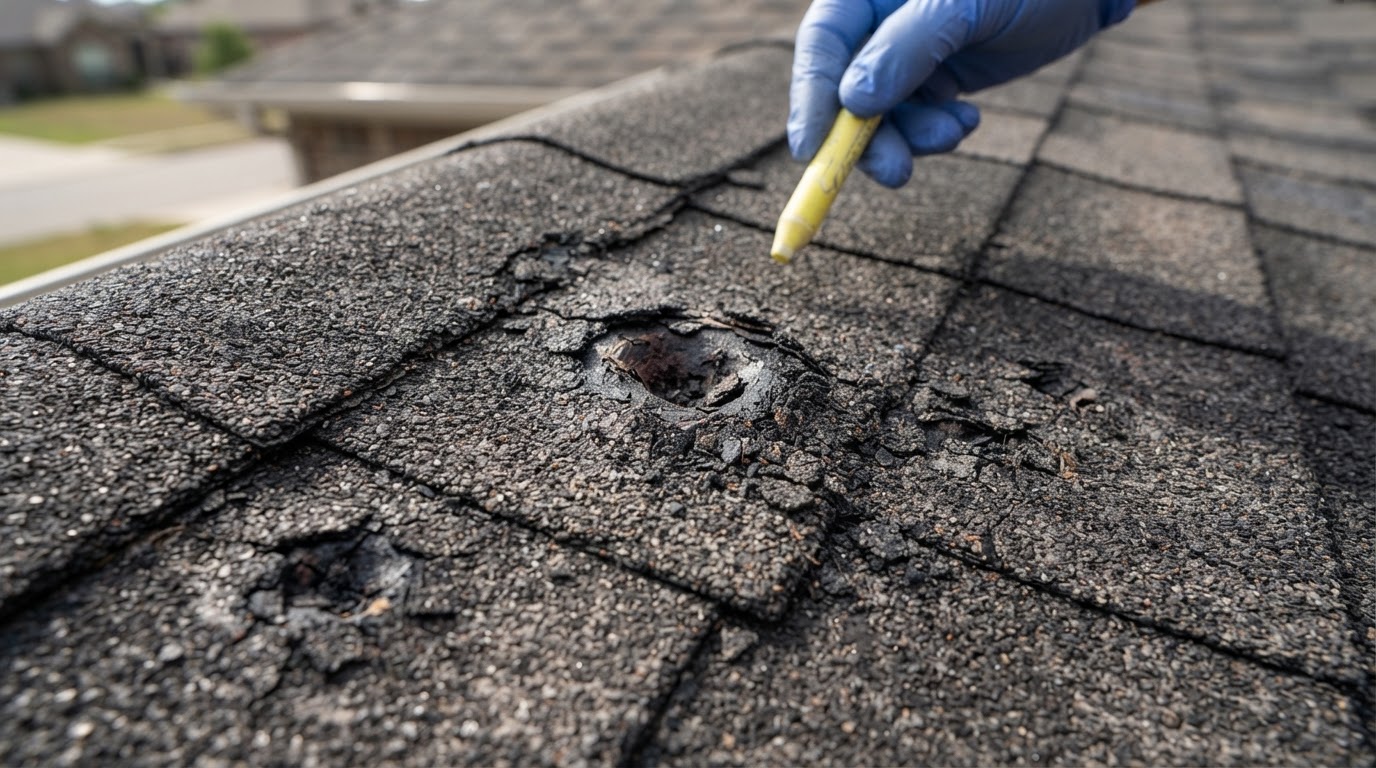
How to Tell If Your Oklahoma Roof Has Hail Damage (Before It Becomes a Bigger Problem)
Oklahoma sits in one of the most storm-active regions in the country. Between spring hail season and the straight-line winds that come through with almost every strong front, most roofs in the metro take some kind of hit every year — the question is whether that hit is cosmetic or structural. Most homeowners can't tell the difference from the ground, and that's exactly how small damage turns into a bigger, more expensive problem six months later when it's raining inside the attic.
Here's what to actually look for, what to avoid doing yourself, and how the claims process works if you find something.
Why Oklahoma Roofs Take More Abuse Than Most
Oklahoma City sits inside what meteorologists call Hail Alley, and the state regularly logs more severe hail reports per year than all but a handful of others. Add in wind gusts that routinely exceed 60 mph during spring storm season, rapid freeze-thaw cycles in winter, and full sun exposure in summer, and a roof here is doing a different job than a roof in a milder climate. Materials rated for "normal" wear elsewhere often underperform here — which is worth knowing before your next roof, not just after storm damage.
7 Signs You Might Have Storm Damage
You can check most of these safely without getting on the roof:
- Granules collecting in gutters or at downspout exits. Fresh hail impact knocks the protective granule coating off asphalt shingles. A few granules are normal; a noticeable pile after a storm is not.
- Dents in soft metal. Check gutters, downspouts, roof vents, and the top of your AC unit. Metal dents easily and works as a reliable proxy for hail size and force — if these are dented, your shingles likely took the same hit.
- Bruised or soft spots on shingles. Press gently on a shingle near a suspected impact zone. A soft, give-y spot (versus the surrounding firm shingle) usually means the mat underneath is fractured, even if the surface looks fine.
- Missing, cracked, or curling shingles, especially clustered on one side of the roof — usually the side that faced the wind.
- Cracked or displaced pipe boots and flashing. These are common failure points in wind events and are easy to miss from the ground with binoculars.
- Granule loss creating dark, shiny patches on the shingle surface where the asphalt layer is exposed.
- Water stains or new spots on interior ceilings, particularly after a storm. By the time you see this, water has usually been getting in for a while.
If you notice two or more of these, it's worth getting a professional inspection before the next rain, not after.
What Not to Do
Don't climb up and inspect it yourself. Storm-damaged roofs are unstable, and most homeowner injuries we hear about happen during the inspection, not the repair. Binoculars from the ground are safer and honestly just as useful for a first pass.
Don't wait. Oklahoma insurance policies typically carry a specific window for filing a storm claim after the date of loss — often one year, but this varies by carrier and policy, so check yours directly. Damage that goes unaddressed can also worsen with each additional storm, sometimes giving an insurer grounds to argue the damage happened over time rather than in a single covered event.
Don't sign anything with a contractor who shows up unsolicited after a storm. Oklahoma law places real restrictions on what roofing contractors can do regarding your insurance claim — for instance, a contractor legally cannot offer to pay, waive, or rebate your deductible as an inducement to sign with them. If someone offers that, treat it as a red flag, not a deal.
The Insurance Claim Process, Step by Step
- Document everything first. Photos and video of visible exterior damage, interior stains, and the date you noticed it.
- Get an independent professional inspection. A written inspection report gives you (and your adjuster) an objective record of what's actually damaged, separate from what the insurance company's own inspector finds.
- File the claim with your insurer and get a claim number.
- Be present for the adjuster's inspection if at all possible, or have your contractor there to walk the roof alongside them — this is often where damage gets missed or underestimated.
- Review the estimate carefully. If your contractor's inspection found damage the adjuster's estimate doesn't reflect, you can request a re-inspection or supplement.
Frequently Asked Questions
How do I know if damage is cosmetic or something my insurance will actually cover?
Cosmetic damage (minor granule loss with no exposed mat) typically doesn't affect the roof's function and usually isn't covered. Functional damage — cracked mats, exposed underlayment, compromised seals — affects the roof's ability to keep water out and is generally what insurers are covering when they approve a storm claim.
Will filing a claim raise my premium?
It can, though this depends heavily on your carrier, your claims history, and state regulations. It's a fair question to ask your agent directly before filing, especially for borderline damage.
Can I choose my own roofing contractor, or does the insurance company assign one?
In Oklahoma, you have the right to choose your own contractor. You're never obligated to use a company the insurer recommends.
Does my roof need a full replacement, or can it be repaired?
This depends on the extent and location of the damage, your roof's age, and whether matching materials are still available. A qualified inspection should tell you honestly which one you actually need — not just recommend a full replacement by default.
If you've spotted any of these signs on your roof, Land Run 1889 Roofing & Construction offers free storm damage inspections across Oklahoma City and the surrounding area. We'll give you a straight answer on what's actually damaged before you file anything.
Schedule Free Inspection