How Long Does a Roof Last in Oklahoma? Signs It's Time to Repair vs. Replace
Every roofing material comes with a manufacturer-quoted lifespan, and almost none of them account for what Oklahoma actually puts a roof through. Hail, 100°F summers, ice storms, and wind gusts that regularly exceed 60 mph all shorten the realistic lifespan of a roof compared to the number on the shingle wrapper. Here's what to actually expect, and how to tell whether your roof needs a repair or has reached the point where repair stops making financial sense.
Realistic Lifespans in Oklahoma Conditions
- 3-tab asphalt shingles: Rated around 20–25 years by most manufacturers, but Oklahoma's hail and heat exposure often bring the realistic number closer to 15–20 years before significant issues appear.
- Architectural (dimensional) asphalt shingles: Rated around 25–30 years, typically holding up somewhat better than 3-tab under Oklahoma conditions due to their heavier construction, though still meaningfully affected by repeated hail exposure over time.
- Class 4 impact-resistant shingles: Similar base lifespan to architectural shingles, but with meaningfully better resistance to the hail impacts that are often what actually ends an asphalt roof's life early in this region — see our full breakdown in our asphalt vs. metal roofing comparison.
- Metal roofing: Rated 40–70 years depending on the system, and this is one of the few materials where Oklahoma's conditions don't dramatically shorten the manufacturer's number, since metal handles hail and wind load noticeably better than asphalt.
- Flat/low-slope commercial membrane roofing: Varies significantly by system (15–20+ years for built-up and modified bitumen, product-dependent for single-ply membranes), with consistent maintenance being one of the biggest factors in whether a commercial roof hits the upper or lower end of that range — something we cover in more depth in our commercial roof maintenance guide.
Signs Your Roof Needs Attention
- Age alone is a signal, not proof. A 22-year-old architectural shingle roof with no visible issues might still have a few good years left, while a 12-year-old roof that's taken multiple hail hits might be functionally near the end of its life already. Age tells you when to start paying closer attention, not when to automatically replace.
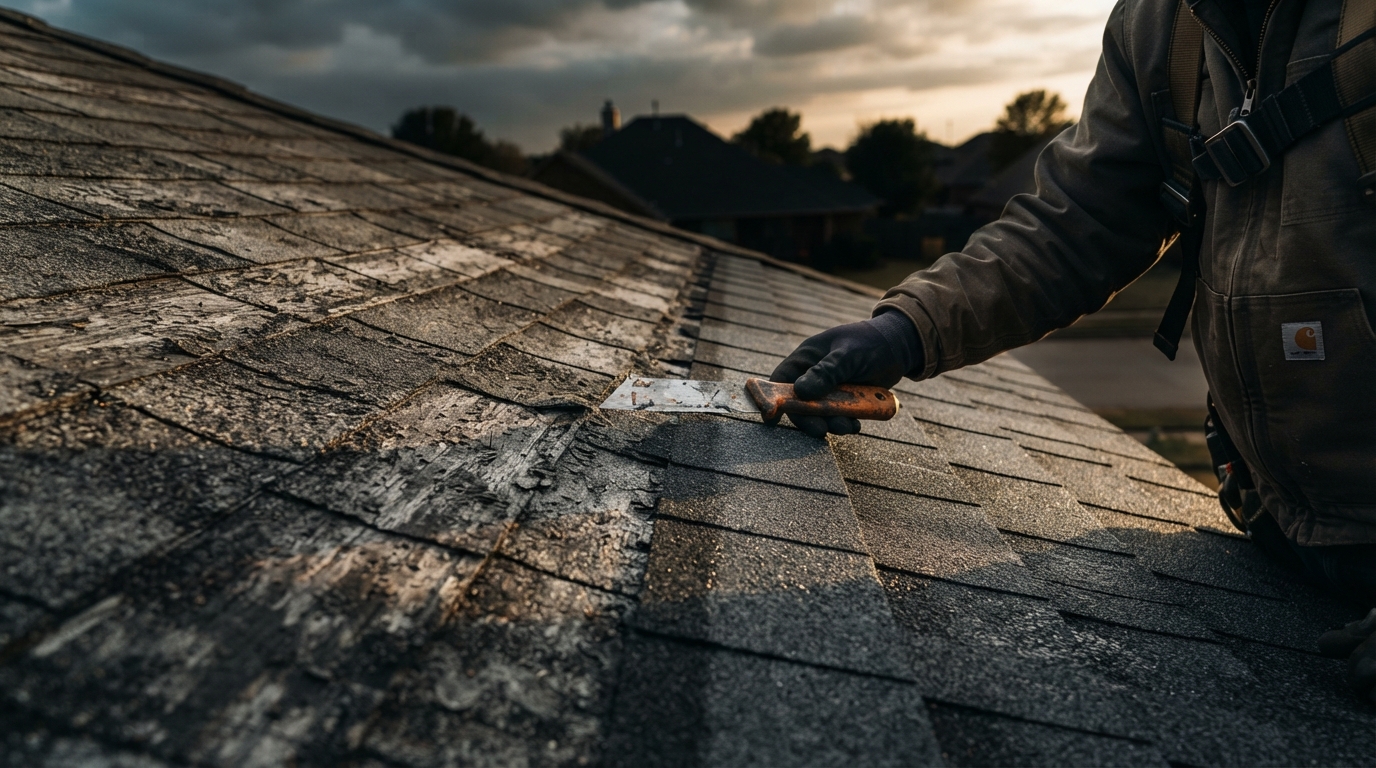
- Granule loss becomes widespread rather than isolated. Some granule loss over time is normal wear. Widespread bald patches or consistently heavy granules in the gutters point to accelerated aging.
- Shingles are curling, cupping, or losing their seal. This typically shows up first on the sides of the roof that get the most direct sun exposure, and it's one of the more reliable visual signs that a roof is aging out rather than just weathering normally.
- Repeated, recurring leaks in different spots. One leak from one identifiable cause (a cracked pipe boot, damaged flashing) is a repair. Leaks that keep appearing in new locations point to a roofing system that's failing broadly, not a single fixable point.
- Visible sagging. This is a structural concern, not just a cosmetic one, and generally warrants a prompt professional inspection rather than waiting.
- Daylight visible through the roof deck from inside the attic, or consistently damp attic insulation. Both indicate the roofing system is no longer doing its core job.
How to Decide: Repair or Replace
A repair generally makes sense when damage is isolated, the roof is otherwise in good condition for its age, and the affected material can still be reasonably matched. A full replacement generally makes more sense when damage is widespread, the roof is already near or past its expected lifespan, or when the cost of successive repairs starts to approach a meaningful fraction of what full replacement would cost.
A useful gut check: if you've needed more than one or two repair calls in the past couple of years for a roof over 15–20 years old, it's usually worth getting a full inspection to see whether you're about to be repairing the same aging roof indefinitely, a few hundred dollars at a time, versus addressing it once.
What a Real Inspection Should Tell You
A trustworthy inspection gives you a straight answer on:
- Which specific signs above are present, and where
- Whether the issue is isolated or systemic
- A realistic estimate of remaining lifespan if repaired versus the cost and lifespan of full replacement
- Whether any storm-related damage exists that might be a covered insurance claim, separate from ordinary wear
If every inspection you've ever had has recommended full replacement regardless of what's found, that's worth being skeptical of.
Frequently Asked Questions
Does roof color affect lifespan in Oklahoma's heat?
Darker shingles absorb more heat and can run somewhat hotter in direct summer sun, which can modestly accelerate aging over the roof's life compared to lighter colors, though it's a secondary factor compared to material quality and hail exposure.
Can a roof be repaired more than once before it needs replacing?
Yes, often several times, as long as each repair addresses an isolated, identifiable issue rather than papering over widespread deterioration.
Does a repair void my roof's remaining warranty?
This depends heavily on the manufacturer and whether the repair was done by a certified installer using compatible materials — always worth confirming before authorizing repair work on a roof still under warranty.
How often should I have my roof inspected even if nothing seems wrong?
Roughly once a year for residential roofs, plus after any significant storm, is a reasonable baseline — catching small issues early is generally what keeps a roof closer to its full expected lifespan.
Land Run 1889 Roofing & Construction provides honest repair-vs-replace assessments across the Oklahoma City metro — we'll tell you which one your roof actually needs, not just which one costs more.
Schedule Roof Assessment